
Every severe weather season, store shelves across the Mid-South empty out in the hours before a big storm. Bread, water, batteries and flashlights disappear, and the people who are scrambling are often the same ones who promised themselves last year that they would "get a kit together." The good news is that building a home emergency kit doesn't require a big budget or a garage full of survival gear. It requires a plan, a few organized containers and the habit of checking them a couple of times a year.
A well-built kit is designed around the emergencies we actually face here: tornadoes, derechos and severe thunderstorms in spring, ice storms in winter, flash floods at almost any time, extreme heat in summer, and the long power outages that can follow all of them. This guide walks through what to include, how to organize it and how to keep it ready.
Start with the goal: 72 hours, then a week
Emergency managers have long recommended that every household be able to take care of itself for at least 72 hours after a disaster. In a widespread event, utility crews, first responders and stores may be overwhelmed. After major ice storms or windstorms, many Mid-South neighborhoods have gone much longer than three days without power.
A realistic approach is to build in two layers:
- A core kit that covers your household for at least three days, ideally longer.
- Go bags that each person can grab in minutes if you need to leave home.
From there, many families slowly expand their supplies toward a week or two, especially for water, food and medications.
Water: the first priority
Water is the single most important item in any emergency kit. The commonly recommended amount is at least one gallon per person per day, for drinking and basic sanitation. A family of four planning for three days needs at least 12 gallons, and more in summer heat or if anyone is nursing, ill or very active.
- Store-bought water is the simplest option. Keep it in a cool, dark place and rotate it according to the date on the package.
- Refillable containers made for water storage work well. Clean and sanitize them before filling, and replace the water every six months or so.
- Don't forget pets. Dogs and cats need water too, often more than people expect.
- Have a backup plan. Keep unscented household bleach (for disinfection, following public health guidance) or a quality water filter as a backup if you run short.
If your home relies on a well with an electric pump, a power outage also means no running water. Plan extra storage or fill bathtubs and containers when a big storm is forecast so you can flush toilets.
Food that requires no power
Choose shelf-stable foods your household actually likes and knows how to prepare without electricity.
- Canned meats, fish, beans, vegetables, fruit and soups
- Peanut butter and other nut butters
- Crackers, granola bars, cereal and dried fruit
- Shelf-stable milk or plant-based milk
- Comfort foods and treats, which help morale during a long outage
- Baby food and formula, if needed
- Pet food for several days
Pack a manual can opener and basic utensils, plates and cups. A camp stove or grill can be useful for cooking, but only outdoors. Never cook with a charcoal grill, camp stove or generator inside your home or garage.
Light, power and communication
Light
- Flashlights and LED lanterns for each person, plus extra batteries. LED lanterns are excellent for lighting a room safely.
- Headlamps keep your hands free for cleanup and caring for children or pets.
- Avoid candles if possible. They are a leading cause of house fires during outages.
Power
- Phone power banks and charging cables. Charge them before storm season and again whenever severe weather is forecast.
- Car chargers for phones, so your vehicle can serve as a backup charging station. Run the engine only outdoors, never in an enclosed garage.
- A small solar charger can extend phone power during multi-day outages.
Information
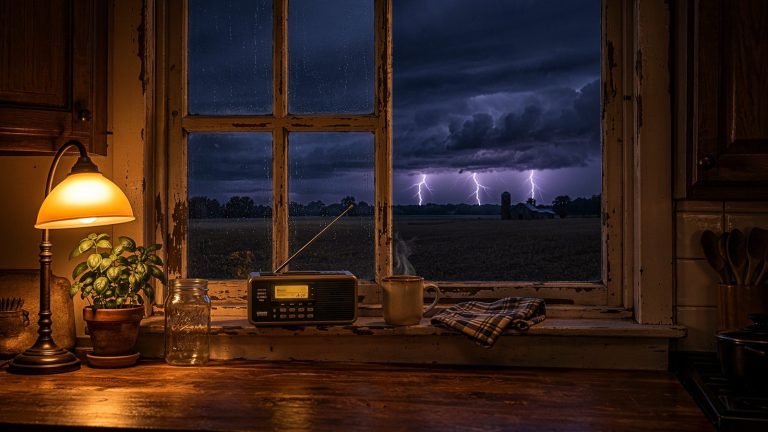
- A NOAA Weather Radio with battery backup. It provides official National Weather Service alerts even if cell service and power are down.
- A battery-powered or hand-crank AM/FM radio for local news.
- A written list of phone numbers. If your phone dies, you may not remember numbers stored in it.
First aid and health
First aid kit
A good first aid kit includes adhesive bandages in several sizes, gauze pads and rolls, medical tape, elastic bandages, antiseptic wipes, antibiotic ointment, tweezers, scissors, disposable gloves, an instant cold pack and a basic first aid guide. Consider taking a first aid and CPR class through a local hospital, community organization or the American Red Cross. Skills are more important than supplies.
Medications
- Keep at least a week's supply of prescription medications, if possible. Talk with your doctor or pharmacist about how to build a safe reserve.
- Include over-the-counter pain relievers, allergy medicine, anti-diarrheal medicine and any other basics your family uses.
- Store a written list of medications, dosages and allergies for each person.
- If anyone needs refrigerated medicine, plan how you will keep it cold during a long outage.
Medical equipment
If a family member depends on oxygen, a CPAP, a power wheelchair or other powered equipment, talk with your provider and your electric utility about backup power and priority programs. Have a plan for where you would go if power is out for days.
Sanitation and hygiene
- Moist towelettes and hand sanitizer
- Toilet paper and feminine hygiene supplies
- Garbage bags and plastic ties
- A bucket with a tight lid for an emergency toilet if water service is disrupted
- Diapers and wipes, if needed
Tools and safety items
- A whistle to signal for help
- A multi-tool or basic tool kit
- Work gloves and sturdy shoes
- Duct tape and plastic sheeting
- A fire extinguisher, and know how to use it
- Battery-operated smoke and carbon monoxide alarms
- A wrench or pliers to turn off utilities, if you know how and when it is appropriate to do so
Documents and money
When disaster strikes, proving who you are, what you own and what insurance you have can be surprisingly difficult. Gather copies of:
- Identification for each family member
- Insurance policies (home, renters, auto, health)
- Deeds, leases and vehicle titles
- Medical information and prescriptions
- Pet vaccination records and photos of your pets
- Recent photos or video of your home's contents for insurance
Store copies in a waterproof folder or bag, and consider keeping encrypted digital copies in secure cloud storage. Keep some cash in small bills. When power is out, card readers and ATMs may not work.
Comfort and climate
The Mid-South throws a wide range of weather at us, so your kit should account for both cold and heat.
- For winter outages: blankets or sleeping bags, warm layers, hats and gloves for each person.
- For summer outages: battery-powered fans, cooling towels and extra water. Know the location of local cooling centers.
- For everyone: a change of clothes, rain gear and sturdy shoes.
- For kids: books, games, coloring supplies and a favorite comfort item. Keeping routines helps children cope.
Go bags: ready to leave in minutes
A go bag is a smaller, portable version of your kit for each person in case you need to evacuate, whether because of flooding, a gas leak, a damaged home or a wildfire. Each bag should include:
- Water and snacks for a day or two
- A flashlight and spare batteries
- A phone charger and power bank
- Medications and copies of prescriptions
- A change of clothes and sturdy shoes
- Copies of key documents and some cash
- A small first aid kit and hygiene items
- A list of emergency contacts and an out-of-town contact
Keep go bags near an exit or in your car, and make a small one for each pet with food, a leash, a carrier and records.
Organizing your kit
A kit is only helpful if you can find what you need in the dark.
- Use clear plastic bins with tight lids, labeled by category: water, food, light and power, first aid, tools, documents.
- Store it in your shelter area if possible. If you shelter in an interior hallway or closet during tornado warnings, keep flashlights, shoes, helmets and a weather radio there.
- Make a checklist and tape it inside the lid with the date you last checked.
Keeping it ready
Set a reminder twice a year, such as at the start of spring storm season and again in the fall before winter weather. Many people tie it to daylight saving time changes.
- Replace expired food, water, medications and batteries.
- Test flashlights, radios and power banks.
- Update clothing for growing children and seasonal changes.
- Review documents and phone numbers.
- Walk through your family emergency plan together.
Start small, but start now
You don't have to build the perfect kit in one weekend. Pick up a case of water and a flashlight this week. Add canned goods and batteries next time you shop. Gather documents on a rainy afternoon. Over a few months, you'll have a kit that can carry your family through the storms the Mid-South is sure to send our way.
When the next warning is issued or the next ice storm knocks out power, you'll be able to skip the crowded store aisles and focus on what matters most: keeping your family safe, calm and together.


Comments
No comments yet. Start the conversation!