When most people picture tornado country, they imagine the wide-open Great Plains: Oklahoma wheat fields, a lone storm on the horizon and a tornado visible from miles away. That image is real, but it leaves out a region that faces just as serious a threat in a very different form. Across the lower Mississippi Valley and the Deep South, from Arkansas and Louisiana through Mississippi, Alabama and Tennessee, meteorologists have long described a "Dixie Alley" where tornadoes are frequent, often deadly and uniquely difficult to see coming.
For those of us in the Mid-South, understanding what makes our tornado climate different is one of the most important pieces of weather knowledge we can have. It shapes how we should prepare, how we receive warnings and how quickly we need to act.
What "Dixie Alley" means
"Dixie Alley" isn't an official boundary drawn on a map. It is a descriptive term meteorologists and emergency managers use for the southeastern region of the United States where tornado activity is high and where the character of the tornado threat differs from the Plains. Research over the past few decades has highlighted the region's concerns: a high proportion of tornadoes occurring at night, a long season that includes the winter months, and a population and housing stock that leave many people vulnerable.
The Mid-South, including west Tennessee, north Mississippi, eastern Arkansas, the Missouri Bootheel and western Kentucky, sits along the northern and western portion of this zone. Our weather is influenced by the same ingredients that fuel Dixie Alley storms farther south and east.
The ingredients: Gulf moisture meets strong storm systems
Moisture from the Gulf
The Gulf of Mexico is the Mid-South's moisture engine. When a storm system approaches from the west, southerly winds pull warm, humid Gulf air northward, sometimes in a matter of hours. That moisture fuels thunderstorms and lowers cloud bases, which favors tornado development.
Strong winds aloft
In the cool season, the jet stream dips farther south, bringing powerful winds aloft over our region. Strong winds that change direction and speed with height create the wind shear that helps thunderstorms rotate. Mid-South tornado events frequently feature very strong wind shear, sometimes paired with only modest instability. Forecasters call these "high-shear, low-CAPE" environments, and they can produce tornadoes even when the atmosphere doesn't look especially unstable.
A trigger
Cold fronts, warm fronts, dry lines and the outflow boundaries left by earlier storms all provide the lift needed to set storms off. When these features cross a moist, sheared environment, both discrete supercells and lines of storms can produce tornadoes.
Why Dixie Alley tornadoes are different
They often strike at night
Compared to the Plains, a larger share of tornadoes in the Southeast happen after dark. Strong storm systems don't wait for afternoon heating, and the nighttime low-level jet often strengthens shear and moisture after sunset. Nighttime tornadoes are especially dangerous because people are asleep, can't see the storm, and may not hear outdoor sirens.
The season is long
The Mid-South has two main tornado peaks. The primary season runs from roughly March through May. A secondary season often develops in late fall and early winter, typically November and December, when strong storm systems return. Tornadoes can and do occur in January and February as well. In practical terms, there is no month of the year when a Mid-South household can completely forget about tornado safety.
They are hard to see
The terrain and vegetation that make the Mid-South beautiful also make tornadoes harder to spot. Forests, hills and river bluffs limit how far you can see. High humidity produces low clouds and heavy rain. Many storms here are high-precipitation supercells, where the tornado is wrapped in rain and hail. Some tornadoes develop within fast-moving lines of storms, called quasi-linear convective systems (QLCS), and spin up quickly with little visual warning.
They move fast
Cool-season storm systems carry strong winds aloft, so storms often move at 40 to 60 mph or faster. A storm that is 20 miles away may arrive in 20 to 30 minutes, and a fast-moving tornado can cover several miles in only a few minutes.
Vulnerable housing
Manufactured and mobile homes are common across many rural parts of the Southeast and Mid-South. These homes provide little protection from even weak tornadoes. Research has repeatedly found that a disproportionate share of tornado deaths in the region occur in manufactured homes, which makes having a plan to reach sturdier shelter essential.
Lessons from past outbreaks
The Mid-South and Southeast have experienced some of the deadliest tornado outbreaks in modern U.S. history. A few examples underline the patterns described above:
- February 5-6, 2008, the "Super Tuesday" outbreak, struck during the winter, with tornadoes across Arkansas, Tennessee, Kentucky, Mississippi and Alabama, many after dark. Union University in Jackson, Tennessee, was heavily damaged.
- April 27, 2011, brought one of the largest and deadliest tornado outbreaks on record across the Southeast, with especially severe impacts in Alabama and Mississippi.
- December 10-11, 2021, saw a nighttime, cool-season outbreak that produced long-track tornadoes through northeast Arkansas, the Missouri Bootheel, west Tennessee and western Kentucky, including the devastating tornado in Mayfield, Kentucky.
Each event combined several Dixie Alley hallmarks: strong, fast-moving storm systems, rich Gulf moisture, tornadoes after dark or outside the "traditional" spring season, and heavy impacts in communities that were not able to see the storms approaching.
Forecasts and warnings: what to watch
Days ahead
The Storm Prediction Center issues convective outlooks up to eight days ahead. When a day-three or day-four outlook places the Mid-South in a risk area, it is a signal to review your plans. Pay attention to wording that mentions "strong tornadoes" or "long-track tornadoes," and note the timing, especially if storms are expected overnight.
The day of
On the morning of a severe weather day, check the updated outlook and local National Weather Service forecasts. NWS offices serving the Mid-South, including Memphis, Jackson (Mississippi), Little Rock and Paducah, often issue graphics showing timing and threats.
Watches and warnings
A Tornado Watch means conditions are favorable for tornadoes in and near the watch area. Watches labeled "Particularly Dangerous Situation" (PDS) indicate an unusually high potential for strong, long-track tornadoes. A Tornado Warning means a tornado is occurring or radar indicates rotation that could produce one. Warnings may include a "considerable" tag for a likely damaging tornado, and in rare cases a Tornado Emergency is issued when a large, violent tornado is threatening a populated area.
Building a Dixie Alley safety plan
Get warnings in more than one way
- Wireless Emergency Alerts on your phone. Make sure they are turned on.
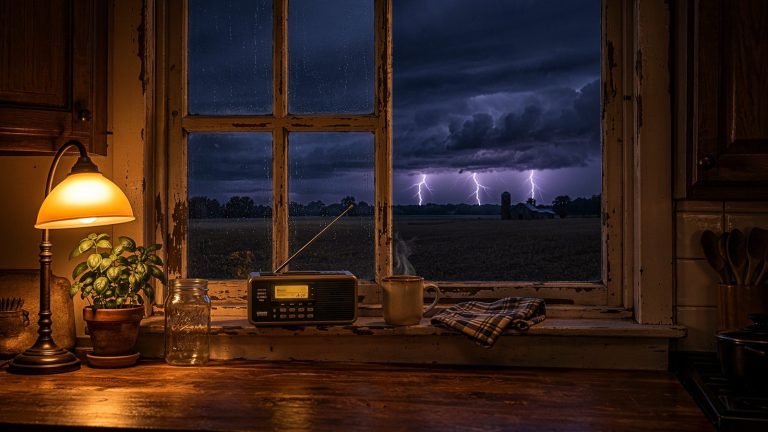
- NOAA Weather Radio with a battery backup, programmed for your county. It can wake you at 3 a.m. when your phone is on silent.
- A trusted weather app with location-based alerts.
- Local broadcast meteorologists during severe weather coverage.
Don't rely on outdoor sirens. They are designed to alert people outdoors and may not be heard inside homes, especially during heavy rain and wind or at night.
Know your shelter
- In a site-built home, go to the lowest floor, in an interior room or hallway away from windows. Basements and storm shelters are best.
- Put as many walls between you and the outside as possible. Cover yourself with blankets or a mattress, and wear sturdy shoes and helmets if you have them.
- If you live in a manufactured home, identify a sturdier building you can reach quickly, such as a community shelter, a neighbor's house or a family member's home. Leave as soon as a watch suggests a significant threat, and certainly before a warning is issued for your area.
- Consider a safe room or storm shelter. FEMA publishes guidance on safe rooms built to withstand extreme winds.
Prepare for nighttime events
- Charge phones before bed and keep them where alerts will wake you.
- Keep shoes, a flashlight and your car keys near your bed on severe weather nights.
- Decide in advance who will wake whom, and where everyone will meet.
Practice
Walk through your plan with your family a couple of times a year, ideally before spring and again in the fall. Tennessee, Mississippi and Arkansas observe severe weather awareness weeks, typically in late winter, which are a good reminder to review your plan.
After the tornado: staying safe in the aftermath
The danger doesn't end when the storm passes. Many injuries happen during cleanup and in the hours after a tornado, so it helps to plan for the aftermath as carefully as for the warning itself.
- Check for injuries and call 911 for anyone seriously hurt. Don't move badly injured people unless they are in immediate danger.
- Watch for downed power lines and assume every one is live. Report them to your utility and keep children and pets away.
- Smell for gas. If you smell gas or hear a hissing sound, leave the building immediately and call the gas company or 911 from a safe distance.
- Wear sturdy shoes, long pants and work gloves. Tornado debris is full of nails, broken glass and sharp metal.
- Use flashlights, not candles, when inspecting damaged homes.
- Document damage with photos and video for insurance before you start cleanup.
- Stay out of damaged buildings until officials say they are safe.
- Be careful with chainsaws and generators. Cleanup injuries and carbon monoxide poisoning are common after tornadoes.
Tornadoes in the Mid-South often strike rural areas where help may take time to arrive. Neighbors checking on neighbors, church groups bringing meals and volunteers clearing debris have always been part of how our communities recover. Knowing basic first aid and having a well-stocked emergency kit puts you in a position to help others, not just yourself.
Living well in Dixie Alley
There is no reason to live in fear because we live where tornadoes happen. Generations of Mid-South families have built lives, farms and communities here while respecting the weather. The difference today is that we have far better forecasts, faster warnings and a better understanding of what makes our tornado climate unique.
The key is to match our preparation to our reality. Tornadoes here can strike at night, in December, hidden by rain and moving fast. That means getting warnings in more than one way, knowing exactly where to shelter, and acting the moment a warning is issued. If we make those habits second nature, Dixie Alley becomes a place where we can live confidently, through every season of the year.
Comments
No comments yet. Start the conversation!