In many Mid-South farmhouses, there was a nail by the kitchen door where the almanac hung. It was consulted more often than almost any other book in the house, except perhaps the family Bible. When should the beans go in? When is the next full moon? When is the best time to cut hay, castrate calves, set fence posts or wean a baby? What will the winter be like? The answers, many people believed, could be found in its pages.
The almanac tradition is older than the United States itself, and it remains woven into Southern rural culture. Even today, almanacs still sell widely every year, and many gardeners still check the almanac before planting. Here's a look at the history of the almanac, what it offers, how its weather predictions measure up, and why it continues to hold such a special place in our lives.
What is an almanac?
An almanac is an annual publication that includes a calendar along with astronomical information, such as sunrise and sunset times, moon phases, eclipses and tides. Over the centuries, almanacs added weather predictions, planting guides, recipes, advice, jokes, poems and essays.
The word "almanac" has uncertain origins, but almanacs themselves are very old. Early versions circulated in medieval Europe, and printed almanacs became popular soon after the invention of the printing press.
Almanacs in early America
Poor Richard's Almanack
One of the most famous early American almanacs was Poor Richard's Almanack, published by Benjamin Franklin from 1732 to 1758. Writing under the pen name Richard Saunders, Franklin included weather forecasts, astronomical information and the witty sayings that made it famous, like "Early to bed and early to rise, makes a man healthy, wealthy, and wise." The almanac was a commercial success and helped make Franklin a household name.
Benjamin Banneker
Benjamin Banneker, a free Black mathematician, astronomer and surveyor from Maryland, published almanacs in the 1790s that included his own astronomical calculations. Banneker's almanacs were notable achievements, and he famously sent a copy to Thomas Jefferson along with a letter challenging the prevailing views on race and slavery. His work helped demonstrate the scientific abilities of African Americans at a time when many denied them.
The Old Farmer's Almanac
The Old Farmer's Almanac, founded by Robert B. Thomas in 1792, is the oldest continuously published periodical in North America. Thomas developed a secret formula for predicting the weather, which he claimed was based on solar activity, weather patterns and astronomy. The almanac still keeps the formula a closely guarded secret, stored, according to the publication's own lore, in a black box at its offices in New Hampshire.
The Farmers' Almanac
The Farmers' Almanac, founded in 1818 and based in Maine, is another long-running publication with its own long-range forecasts and secret formula, attributed to a pseudonymous forecaster.
Regional and local almanacs
Many regional and local almanacs have been published over the years, including Southern almanacs tailored to the planting seasons and folk customs of the region. Some were published by seed companies, patent medicine makers or local newspapers and handed out free to customers.
Planting by the signs
One of the most enduring traditions associated with almanacs is "planting by the signs," a practice still followed by many gardeners and farmers across the rural South.
Moon phases
According to tradition, crops that produce above ground, such as beans, corn and tomatoes, should be planted during the waxing moon, between the new moon and the full moon. Root crops, such as potatoes, onions and carrots, should be planted during the waning moon, between the full moon and the new moon.
The zodiac and the "signs"
Almanacs also assign each day to a sign of the zodiac, based on the moon's position. Each sign is associated with part of the body, from the head (Aries) to the feet (Pisces), often illustrated with the "man of signs," a figure showing which sign rules which body part. Traditional guidance says some signs are "fruitful" and good for planting, while others are "barren" and better for weeding, clearing land or harvesting.
Many people in the Mid-South grew up hearing that you should plant potatoes when the signs are in the feet, or that you shouldn't do certain tasks when the signs are in the "bowels." These customs were passed down through families and shared across porch rails and church potlucks.
Does it work?
Scientific evidence that planting by the moon or the zodiac signs improves crop yields is limited. Agricultural research focuses on factors like soil temperature, moisture, frost dates, day length and plant varieties. Still, many gardeners enjoy planting by the signs as a way of connecting with tradition and the natural rhythms of the year. And because following the almanac encourages people to plan, observe and pay attention to the seasons, it may help gardeners in indirect ways.
Long-range weather predictions
How almanacs forecast the weather
The weather predictions in almanacs are long-range forecasts, often made more than a year in advance. Publishers typically describe their methods only in general terms, citing factors such as solar cycles, historical weather patterns and astronomical influences.
How accurate are they?
Scientists and meteorologists have generally been skeptical of almanac weather predictions. Independent evaluations comparing almanac forecasts with actual weather have generally found that their accuracy is not much better than chance. Almanac publishers, for their part, often claim high accuracy rates, though the vague wording of many predictions can make them difficult to evaluate.
Modern meteorology has shown that detailed day-to-day weather forecasting is limited to about one to two weeks because of the chaotic nature of the atmosphere. Beyond that, forecasters can sometimes identify broad tendencies, such as whether a season is likely to be warmer or wetter than normal, based on factors like El Niño and La Niña. The National Oceanic and Atmospheric Administration's Climate Prediction Center issues seasonal outlooks that describe probabilities, not specific day-by-day weather.
Predicting a snowstorm on a specific date months in advance is beyond the reach of current science.
What almanacs get right
While their long-range weather forecasts may not be reliable, almanacs offer plenty of valuable information.
- Astronomical data: Sunrise and sunset times, moon phases, eclipses and planetary positions are calculated precisely and are highly accurate.
- Tides: Tide tables are based on well-understood astronomical cycles.
- Gardening tips: Many almanacs include practical advice on planting dates, frost dates, soil preparation and pest management.
- Recipes and household tips: Generations of families have turned to almanacs for recipes, home remedies and practical advice.
- History, humor and culture: Almanacs are full of interesting articles, trivia, jokes and stories.
The almanac in Southern culture
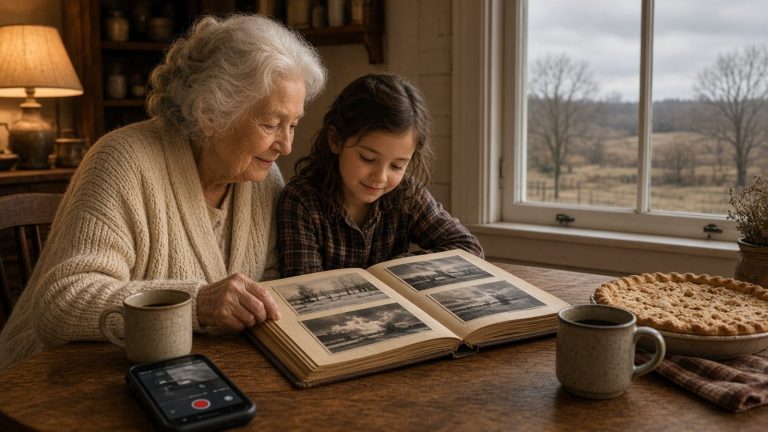
In the rural South, the almanac was more than a book. It was a companion and a calendar for life's rhythms. Families gathered around the kitchen table to look up when to plant, when to harvest and when to expect the next full moon. It shaped conversations at the feed store and the barber shop. Grandparents passed down almanac wisdom along with their own observations of the weather.
For many Mid-South families, the almanac represents a connection to the land and to the generations who worked it. It reminds us of a time when people paid close attention to the moon, the seasons and the sky, because their livelihoods depended on it.
Blending tradition and science
You don't have to choose between the almanac and the weather forecast. Many gardeners and farmers use both.
- Use modern forecasts for safety and timing. For decisions about frost, severe weather and day-to-day planning, rely on the National Weather Service and local meteorologists.
- Check your frost dates. Local extension offices, such as those of the University of Tennessee, Mississippi State University and the University of Arkansas, publish average last and first frost dates and planting guides tailored to your area.
- Watch soil temperatures. Many seeds germinate best when soil reaches specific temperatures, often more important than the calendar date.
- Enjoy the almanac for what it offers. Use it for astronomical information, gardening tips, history and a connection to tradition.
- Keep your own records. Note when you plant, what the weather does and how your crops perform. Over time, your own garden journal can become your most valuable almanac.
Making your own almanac
One of the best ways to honor the almanac tradition is to start your own. Generations of Mid-South farmers kept handwritten records in calendars, ledgers and diaries, noting rainfall, frost, planting dates and memorable storms. Those records were local almanacs, tailored to a single farm or garden.
- Record the weather. Note daily high and low temperatures, rainfall and notable events. A simple rain gauge and thermometer are enough to start.
- Track the garden. Write down what you planted, when, where and how it performed. Note the date of the first ripe tomato, the first frost and the last harvest.
- Watch nature's calendar. Record when the redbuds bloom, when the hummingbirds arrive, when the first fireflies appear and when the leaves turn. This kind of record keeping, called phenology, can reveal patterns from year to year.
- Add the moon and the signs if you plant by them, and compare your results over several seasons.
- Share it. Swap notes with neighbors, gardening clubs or family members. Your observations may help someone else.
After a few years, you'll have a record more valuable to your own garden than any printed almanac, and a family heirloom for the next generation.
A tradition worth keeping
The almanac endures because it offers something beyond data. It speaks to our desire to understand the seasons, to plan for the future and to connect with the people who came before us. Whether you plant by the signs, chuckle at the jokes or simply enjoy the moon phases, the almanac remains a small book full of big wisdom.
So hang one by the kitchen door if you like. Check the moon before you plant your beans. Then check the forecast before you head out to the garden. In the Mid-South, the best wisdom has always come from blending tradition with careful observation.
Comments
No comments yet. Start the conversation!